Henry and Grace’s agreement to keep their relationship private
Our Chemical HeartsHenry Isaac Page and Grace Town’s agreement to keep their relationship private gives an uncertain romance room to develop while keeping it out of public view. It is not presented as a formal pact so much as a boundary Grace asks Henry to respect: she wants time to decide what she wants, and Henry tries to accept the secrecy even as it makes him question his place in her life.
Terms and Motive
Grace asks Henry not to tell anyone about them, at least until she is sure what she wants. The request is shaped by the recent death of her significant other and the sense that dating so soon afterward would be considered in poor taste. Henry recognizes that he and Grace have kissed only twice and are not officially a couple; he therefore regards the request as fair, though he is hurt by being kept secret.
The arrangement leaves the relationship deliberately undefined. Henry wonders about Grace’s past and whether she loved her deceased partner, but decides it is not his place to ask. He also admits that part of him would rather preserve the mystery than confront the grief that shapes her circumstances. Privacy thus protects Grace from public scrutiny while allowing Henry to avoid questions that might unsettle his idealized understanding of her.
Intimacy Out of Public View
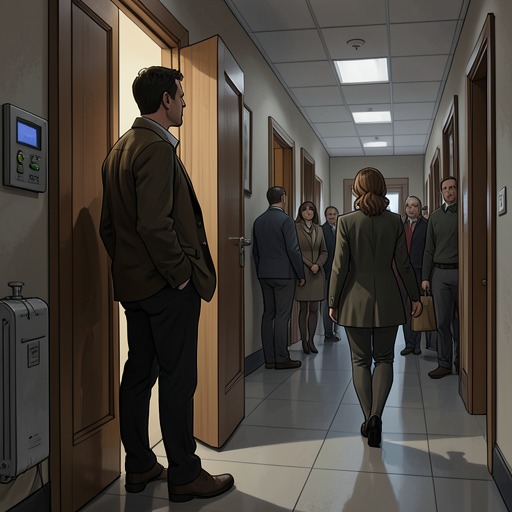
At Heslin’s party, Henry and Grace kiss in a dark corridor after moving through the crowd together. When Grace says she should go home, Henry offers to walk her. She calls her parents to say she is walking, making clear that he will not come inside; on the way, the pair talk about possible newspaper themes as though they had not just kissed. The contrast between their private closeness and ordinary conversation illustrates how carefully they keep intimacy separate from what others might see.
Their first movie outing follows the same pattern. They hold hands throughout the film, and Grace traces circles on Henry’s skin and sometimes kisses his hand. Afterward, they walk to the bus stop with their hands in their pockets. Henry considers whether the cold explains the gesture or whether they are avoiding being seen together. In public, they continue to appear as friends, even as their behavior in the dark theater suggests a more intimate connection.
Secrecy and Changing Boundaries
The private relationship also advances beyond kissing. After a night of drinking, Henry and Grace walk home together; their mutual physical closeness continues in the darkness and at Henry’s house. The account presents this as an intimate encounter within the privacy they have maintained, rather than as a public declaration or a clear change in their relationship’s status. For Henry, the lack of a public definition remains consequential: private intimacy does not settle whether Grace considers them a couple.
At the Thanksgiving fair, the boundary becomes less consistent. Grace seeks Henry out again, behaves flirtatiously, touches his hair, and shows affection in front of her friends. Henry allows it, feeling both distressed by the situation and hopeful that her public attention means they might be together after all. Her affectionate behavior does not itself resolve the uncertainty, and the scene exposes the emotional cost of an arrangement in which visibility and commitment remain unsettled.
Significance
The agreement is more than a request for discretion: it structures what Henry can know, ask, and expect. In private, the couple can share kisses, hand-holding, and greater intimacy; in public, they may still pass as friends, or Grace may show affection without clarifying what it means. Henry tries to honor her reasons, but the gap between their private closeness and public ambiguity feeds his hope and hurt. The arrangement therefore enables their connection while preserving the uncertainty that makes it difficult for Henry to understand.